
Breast Cancer Treatment in Lahore
Found a Lump? You’re Not Alone. Get advanced care quickly in Lahore from Dr. Muhammad Waseem Anwar because early detection saves lives.
- Expert Breast Cancer Surgery and Treatment
- Breast-Conserving Latest Surgical Approach
- Early Detection for Better Treatment Outcomes
- Private and Judgment-Free Consultations
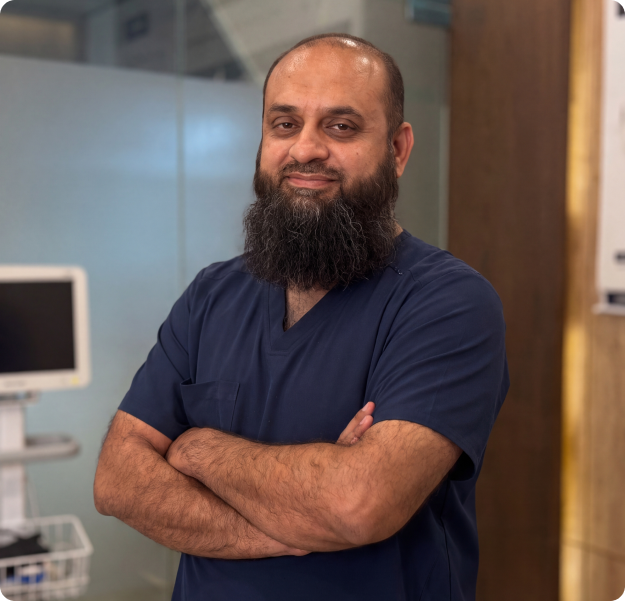
Meet Dr. Muhammad Waseem Anwar
Breast Cancer Specialist in Lahore
Dr. Muhammad Waseem Anwar is a consultant surgeon who works in Lahore and has more than 17 years of experience in his profession. He possesses qualifications of MBBS and FCPS (Surgery) from the College of Physicians & Surgeons Pakistan. Dr. Muhammad Waseem Anwar has also been a Fellow of the American College of Surgeons (FACS). His interest and passion for knowledge inspired him to pursue CHPE (Certificate in Health Professions Education) from the University of Liverpool. He is also licensed by the Pakistan Medical & Dental Council.
He sees patients at Doctors Hospital (Johar Town), North Ravi Hospital (Shahdara), and Ali Fatima Hospital (Raiwind Road). During the period of his practice, he has worked in laparoscopy units of different high-quality hospitals in Lahore. During this time, he has treated conditions of the abdomen, female reproductive organs, and urinary tract — using biopsy for diagnosis and surgery for treatment.
Cancer surgery is also one of his specialties. He has successfully treated many women with breast cancer, from the first worrisome lump to biopsy, surgery, and beyond. His approach is to provide breast-conserving surgery, so that the woman does not have to lose more of her breast tissue than necessary. He creates customized treatment plans for patients of all ages. This is what makes him a recognized breast cancer specialist in Lahore.
Badges, Accreditations & Certifications
UHS
University of Health Science, Lahore
FCPS
Fellowship of the College of Physicians and Surgeons
FACS
Fellow of the American College of Surgeons
CHPE
University of Liverpool, UK
PMDC
Pakistan Medical and Dental Council
NORTH RAVI HOSPITAL
NORTH RAVI HOSPITAL
Doctors Hospital & Medical Center
What Is Breast Cancer?
Breast cancer starts because healthy cells within your breasts start to grow uncontrollably. Under normal circumstances, your body continues to create new cells in order to replace the old ones. Sometimes that repair system fails. Damaged cells pile up inside the milk ducts or lobules and can form a tumor within your breast. However, not all tumors are cancerous, and not all lumps are hazardous, although when a tumor is cancerous, it can spread. Detecting cancer in the early stages of development increases your chances of survival to as high as 95%, because the cells will not yet have metastasized.
The Main Types of Breast Cancer

Ductal Carcinoma
in Situ (DCIS)
This cancer is a type of early and non-invasive breast cancer that occurs when abnormal cells are trapped in the milk ducts and do not extend out into the surrounding breast tissue. DCIS has not penetrated the fat or muscle layers of the breast, and hence it is non-aggressive with a very high rate of cure. The treatment is based on surgery that involves excising the DCIS in situ completely and may be followed by radiotherapy for prevention of recurrence.

Invasive Ductal Carcinoma (IDC)
IDC is the most common type of breast cancer, accounting for about 80% of all diagnoses. IDC begins in the milk duct and spreads outside to invade the fatty breast tissues around the ducts. This cancer can either develop slowly or rapidly; therefore, your breast cancer surgeon in Lahore immediately assesses its grade and receptor status after surgical excision. Treatment usually pairs surgery with radiation — plus chemo or hormone therapy when the cancer is aggressive.

Invasive Lobular Carcinoma (ILC)
The ILC is the second most common form of breast cancer and starts in the lobules. It forms thin sheet-like masses, which may have the sensation of a thickened area or a thickening of tissue, and require careful imaging and thorough surgical margin resection. This type is usually surgically treated using either breast-conserving surgery or mastectomy surgery according to the extent of disease.

Inflammatory Breast Cancer (IBC)
Inflammatory breast cancer is a rare type of breast cancer, which blocks the small lymph vessels of the skin covering the breast. This form of the disease does not produce a mass but makes the breast swell rapidly, giving the breast the appearance of a red, inflamed, and swollen breast, and sometimes an orange-peel skin texture. Because this form of the disease acts fast, the treatment for this disease involves systemic chemotherapy to reduce swelling, followed by a total mastectomy and radiotherapy.
Breast Lump Evaluation Your Clear, Step-By-Step Guide
The sudden discovery of a lump in the breast creates instant anxiety, but you should not panic. Up to 80% of all breast lumps seen and assessed by doctors are completely benign cysts, benign fibroadenomas, or just hormonal changes. However, even with a new lump, a visit to a breast cancer specialist in Lahore will give you the result within a few days. Here is a step-by-step guide:
Clinical examination
The surgeon examines the lump and takes your history. A matter of minutes.
Imaging
Ultrasound for younger women, mammography for older women (often combined).
Biopsy
Performed only if the imaging reveals anything suspicious – FNAC or core needle biopsy.
Results
Benign requires monitoring and regular checkups. Malignant means a definite treatment plan, immediately.
Diagnostic Tools That Will Tell You Everything
A mammogram, breast ultrasound, and MRI provide an image of what happens inside the breast. FNAC and core needle biopsy tell you exactly what the cells are. In case of cancer, a CT scan will stage the cancer.
Symptoms of Breast Cancer
When to See a Doctor
Being attentive to monthly changes in the breasts enables you to note small changes before they become bigger health problems. Normal symptoms to be evaluated include:
- New lump, hard knot, or thickening in any part of the breast or underarm
- A visible change in the shape or appearance of one of your breasts
- A dimpling or pulling in the skin when you lift your hands
- Spontaneous nipple discharge, especially if it's bloody
- Inverted nipple (recently drawn in, flattened, or pointing)
- Persistent redness or peeling of skin on the areola
- ⚠️ See a doctor right away if a lump grows fast, the skin breaks open (ulceration), or there's bleeding. You shouldn’t "wait and see."
Cost of Breast Cancer Treatment in Lahore
Cost is a legitimate concern. Nobody likes an unexpected invoice in addition to their bad news. Depending on the type of surgery (lumpectomy requires way less preparation than a mastectomy procedure), the hospital you select, the doctor’s fees, and whether there are any post-operative treatments (radiation therapy or chemotherapy), you will pay different amounts for breast cancer treatment in Lahore. To give you an estimate, a breast cancer lump removal surgery in Lahore will cost you somewhere in the range of PKR 250,000-450,000. If you require a mastectomy, the costs will be higher due to more complex surgery – around PKR 400,000-800,000. It is a smart choice to use a skilled surgeon and a fully equipped tertiary center in order to decrease complications and minimize re-hospitalization or repeat surgery.
Every case is different. Book a consultation for an itemized estimate based on yours.
Breast-Conserving Surgery Safe Removal While Keeping Your Breast
Women usually don’t know this: when having early-stage cancer, it isn’t necessary to cut off the whole breast. Breast-conserving surgery removes the cancerous growth while leaving the rest – and in the case of an early stage, the results are the same as those of a mastectomy.
What Is Lumpectomy?
It is breast cancer lump removal surgery in which only the tumor is removed along with a thin layer of healthy tissue around it. Then the patient gets radiation therapy to kill any stray cancer cells. In the case of early-stage cancer, the survival rate equals that of a mastectomy.
Oncoplastic Surgery: Combining Cancer Removal with Natural Form
It combines cancer resection with plastic surgery to reshape the tissue. While performing the very same operation to cut out the tumor, Dr. Muhammad Waseem Anwar performs reshaping of your natural breast tissues to fill in the resulting defect. The result? No dent, no flat spot — just a natural shape.
Sentinel Lymph Node Biopsy
This is performed to locate and remove just one or two “sentinel” or guardian nodes that collect the drainage from the area where the cancer is located. These sentinel nodes are then examined under a microscope by a pathologist. If they are not affected by the disease, then there is no need to remove any more nodes, which leaves your chances of developing arm swelling due to lymphedema at an absolute minimum.
Lumpectomy vs. Mastectomy Comparison
| Surgical Factor | Breast-Conserving Surgery (Lumpectomy) | Total Mastectomy Surgery |
|---|---|---|
| Breast Preservation | Preserved (Only tumor and small rim removed) | Breast tissue entirely removed |
| Radiation Therapy | Needed in most cases to treat remaining tissue | Only needed for large tumors or node spread |
| Recovery Period | Fast (1 to 2 weeks for most daily tasks) | Moderate (4 to 6 weeks for full chest healing) |
| Long-Term Survival | Equal in early-stage breast cancer | Equal in early-stage breast cancer |
| Arm Swelling Risk | Low when combined with Sentinel Node Biopsy | Moderate to higher if many nodes are removed |
Dr. Muhammad Waseem Anwar's Surgical Approach
Whenever possible, Dr. M. Waseem Anwar opts for breast preservation. He makes his incisions along natural skin folds and areolar margins, leaving behind no noticeable scars.
Understanding Your Surgical Choices with
Dr. Muhammad Waseem Anwar
Surgery to remove breast cancer is not a universal approach, but rather a series of different approaches depending on the nature, type, size, and stage of your cancer.
01
Mastectomy (Complete Breast Removal)
For patients with large tumors or those that have occurred in multiple locations of the breast, or patients requiring complete breast removal, mastectomy is a safe treatment method. Total (simple) mastectomy removes the entire breast. Modified radical mastectomy additionally removes underarm lymph nodes. Skin-sparing or nipple-sparing mastectomy leaves the outer skin intact for reconstruction of the breast to look more realistic.
02
Lymph Node Surgery Sentinel Lymph Node Biopsy (SLNB)
The first test done for early cancers, where the primary drainage nodes are removed to preserve the function of nerves and arm drainage. Axillary Lymph Node Dissection (ALND): It is carried out when there is evidence of cancer on imaging or through biopsy showing that cancer has spread to the deeper regions of the axilla.
03
The Importance of a Cancer-Specific Surgeon for Your Operation
It is important to realize that cancer surgery is unlike conventional surgery. A qualified cancer surgeon like Dr. Muhammad Waseem Anwar knows how the tumor behaves biologically, operates in a systematic way to get clear margins, and works with your medical and radiation oncologists. It is crucial to have one surgeon who will be responsible for your surgery throughout your recovery process.
Why Women Across Lahore Trust Dr. Muhammad Waseem Anwar
Here is why women trust our breast cancer specialist in Lahore for their breast cancer treatment:
- Certified Cancer Surgeon by PMDC: With 17+ years of practical surgical experience both in and out of Pakistan.
- First Choice for Breast Preservation: Prefers lumpectomy and breast-sparing surgeries wherever safe.
- Collaboration with Oncological Team: Works closely with medical oncologists, radiologists, and pathologists.
- Total Privacy and Empathy: Conducted in a completely private environment with complete respect for the patient and their family.
- Privileges to Practice in Well-Equipped Hospitals: Practice in up-to-date hospitals equipped with round-the-clock critical care facilities.
How Dr. Muhammad Waseem Anwar Compares to General Surgical Practice
| Care Quality | Dr. Muhammad Waseem Anwar | Typical General Surgical Setup |
|---|---|---|
| Breast Preservation | Preferred approach whenever safe | Often defaults directly to full mastectomy |
| Oncoplastic Technique | Yes, reshapes tissue during cancer removal | Rarely offered; leaves contour defects |
| Oncological Training | Fellow of American College of Surgeons (FACS) | General surgical practice without cancer focus |
| Lymph Node Sparing | Uses targeted Sentinel Node Biopsy | Frequently performs unnecessary wide node removal |
| Care Coordination | Manages full pathway with oncologists | Limited to the operating room only |
Real Patient Reviews After Breast Cancer Treatment
Everyone’s experience is different, and getting to hear from women who have survived breast cancer after going through their surgery may shed light for those who are still struggling.
“I was very uncomfortable seeing a male surgeon for my breast problem, but the clinical team of Dr. Waseem Anwar did their best to make me feel comfortable and respected. He treated my condition seriously, conducted a needle biopsy, and found out about my DCIS in time, when there was no metastasis yet. I would recommend him to anyone who needs an honest and highly professional surgeon.”

Nida Saleem, Johar Town
“I kept postponing that appointment. But when I did finally make that visit to see Dr. M. Waseem Anwar, he told me it was cancer, but there was nothing much to worry about since the cancer was small and quite curable. My mastectomy procedure was so smooth, and recovery was faster than expected. Now I’m back to my work-life once again.”

Tehreem Anwar, Lahore
Recovery After Breast Cancer Removal Surgery What to Expect
Recovery looks different for every woman. These timelines give you a realistic picture of the road ahead.
Lumpectomy Recovery
Day 1: Most patients go home the same day or the next morning
Week 1: Rest. Gentle arm exercises begin to keep the shoulder loose
Week 2: Light activities return — walking, errands, desk work
Week 4–6: Full recovery; radiation therapy usually starts now
Mastectomy Recovery
Day 2–3: Hospital discharge once drains and pain are managed
Week 2: Drains removed, wound care continues
Week 4–6: Gradual return to normal activities
Month 2–3: Full recovery; reconstruction planning, if you want it
Do:
Do your arm exercises to prevent stiffness, keep the wound clean and dry, show up for every follow-up.
Don’t:
❌ no heavy lifting for 4–6 weeks, and skip underwire bras until your doctor says it’s fine.
Emotional support
Feeling anxious or low after surgery is normal — this was a big event. Talk about it. Lean on your family. Join a breast cancer support group in Lahore; they help more than you’d expect. You don’t have to carry this alone.
Red flags — call your doctor right away if you get a fever, the wound looks infected, you notice severe swelling, or your arm swells up (a possible sign of lymphedema).
Safety First The Standards
Behind Your Surgery
All of our cancer procedures take place in Class A operating rooms equipped with positive pressure and filtration of air. Every surgical tool, drape, or instrument is subjected to thorough autoclaving in order to prevent any chance of infection after the operation.
In the hands of Dr. Muhammad Waseem Anwar, your procedure is carried out in a sterile cancer surgery operating room equipped with the latest surgical instruments and assisted by oncology nurses. You will be attended by a team of surgeons, certified anesthesiologists, and intensive care doctors who will watch over your heart rate, respiration, and other vital parameters during the procedure. All of the cancer tissue samples are analyzed by histopathologists, and the outcome of each surgery is communicated to oncologists.
Visit Our Clinics in Lahore
Choose the location that is most convenient for you and contact us to confirm clinic timings and appointment availability.
Doctors Hospital
Johar Town, Lahore
Phone: 03294663487
North Ravi Hospital
Shahdara, Lahore
Phone: 03294663487
Ali Fatima Hospital
Raiwind Road, Lahore
Phone: 03294663487
Other Treatments by Dr. Muhammad Waseem Anwar
Dr. Muhammad Waseem Anwar offers general and laparoscopic surgeries for a variety of conditions, including:
Frequently
Asked Questions
Still have you any question?
Is every breast lump cancer?
No. Around 8 in 10 breast lumps are benign. But you can’t tell by feel alone — only a proper exam and imaging can. Any new lump deserves a check.
What is the survival rate for breast cancer?
If it is caught early, while the cancer is still in the breast, the five-year survival rate is over 95%.
Will I need chemotherapy after surgery?
Not always. It depends on the cancer’s type, size, and stage. Some women need only surgery plus radiation; others need chemo or hormone therapy. Your oncologist will tell you what your case requires.
How long is the recovery after breast cancer removal surgery?
Lumpectomy: most women are back to light activity in 1–2 weeks. Mastectomy: plan on 4–6 weeks, with full healing over a few months.
What is the cost of breast cancer surgery in Lahore?
It varies with the surgery type and hospital — lumpectomy costs less than mastectomy. Book a consultation for a clear, itemized estimate for your situation.